0
0
May 28, 2026
How to Choose a Private Office Space in Singapore (2026 Guide)
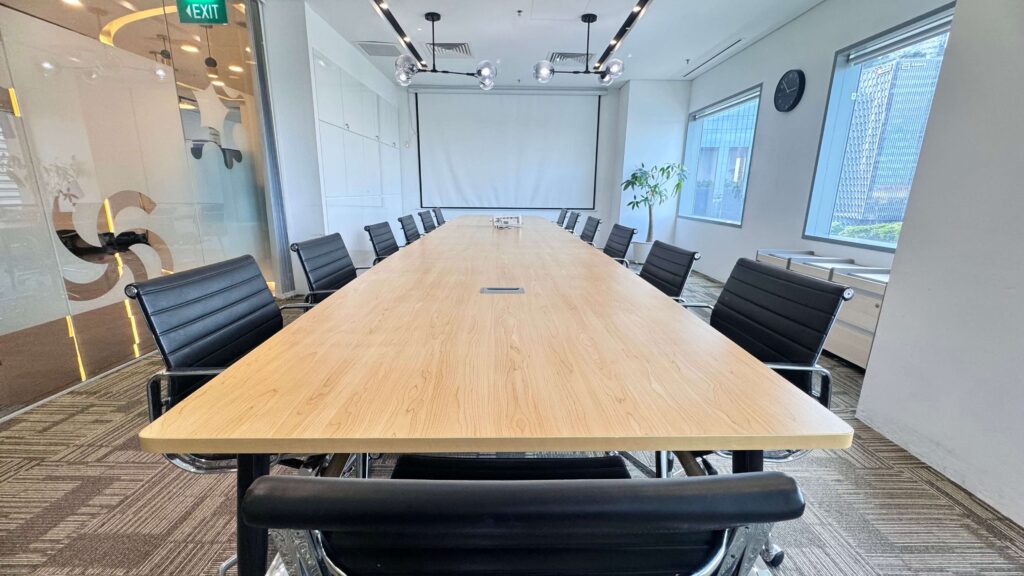
TLDR answer: When choosing a private office space for rent in Singapore, the five things to look at first are location and MRT access, all-inclusive pricing, lease flexibility, what is actually included in the monthly fee, and the professional community around the building. For most small teams, flexible private offices in Singapore typically sit between SGD 1,000 and SGD 1,500 per month. UClub offers fully furnished private offices from SGD 900/month at One-North and Suntec City CBD, with no minimum lease.
Finding a private office space for rent in Singapore is not difficult. A quick search will give you plenty of options across the CBD, city fringe, and business parks. The harder part is knowing which space is genuinely right for your team before you commit.
Many growing businesses make the same mistake. They either focus only on the lowest price and end up in a space that does not support how the team actually works, or they get impressed by a polished interior and miss the lease terms, hidden costs, or access limitations that matter later.
A good private office should do more than give you four walls and a door. It should make your day-to-day operations easier, give your team a reliable base, support client meetings when needed, and keep your costs predictable as your business grows.
This guide walks through the five decisions that matter most when choosing private office space in Singapore, along with the practical questions you should ask before signing anything.
1. Choose Your Location Based on Who Your Office Is Really For
Location is usually the first filter when looking at office space rental in Singapore, and for good reason. It affects how clients see your business, how easily your team can commute, and what kind of professional community you become part of.
A private office is not only a place to work. It also becomes part of your business identity. The address you put on your website, invoices, name cards, proposals, and email signatures says something about your company before people even meet you.
In Singapore, office locations generally fall into two broad groups.
The first is the CBD and central business cluster. This includes Raffles Place, Tanjong Pagar, Marina Bay, and Suntec City. These locations are familiar to clients across finance, legal, consulting, corporate services, technology, and regional business functions. A Suntec City or Marina Bay address tends to signal credibility and accessibility. For businesses that regularly meet clients, investors, partners, or vendors in person, that impression can be worth the higher monthly cost.
The second group is the decentralised innovation belt, which includes One-North, Fusionopolis, Mapletree Business City, Changi Business Park, and similar districts. These areas are often more relevant for startups, technology companies, life sciences businesses, research-led firms, and NUS-affiliated teams. They are built around ecosystems rather than just office buildings. For a deep tech venture or early-stage startup, being based in One-North may open more useful doors than a traditional CBD address.
Before you shortlist spaces, ask yourself who the office is really for.
If most of your team travels in daily, MRT access and commute time should lead the decision. If clients visit often, the building should feel professional, easy to find, and close to major transport links. If your business depends on partnerships, talent, grants, research, or startup networks, then the surrounding ecosystem matters as much as the address itself.
A cheaper office in the wrong location can still cost you in other ways. Longer commutes affect staff morale. A hard-to-reach address makes client meetings less convenient. A location outside your business ecosystem may reduce the casual opportunities that come from being near the right people.
2. Understand How Private Office Space Is Actually Priced in Singapore
Traditional commercial office leases in Singapore are usually quoted by square foot per month. This helps with basic comparison, but it rarely tells you the real monthly cost of using the space.
That quoted rent usually covers the bare office space only. Fit-out, furniture, utilities, internet, cleaning, air-conditioning, access systems, maintenance, and end-of-lease reinstatement may all sit outside the headline number. Once you add everything up, the total cost can look very different from the initial rate.
Flexible private offices work differently. Instead of paying rent, setting up the office yourself, and managing multiple vendors, you pay one monthly fee. This fee usually covers the private room, furniture, internet, utilities, cleaning, and some level of reception or administrative support.
For SMEs, startups, and teams under 20 people, this model is often easier to manage. It gives you a clearer monthly cost, reduces upfront spending, and removes the need to handle operational details that are not part of your core business.
Price ranges in Singapore can vary widely depending on location, building grade, office size, and inclusions.
Price ranges (2026)
CBD Grade A: SGD 9-14 psf/month | CBD Grade B: SGD 6-9 psf/month | Decentralised (One-North etc): SGD 4-7 psf/month | Flexible private office (all-inclusive): SGD 900-1,500/month for small teams
For teams searching for a private office in Singapore for under SGD 1,000 per month, flexible serviced offices are usually the most realistic category to explore. They may appear more expensive on a square-foot basis, but that comparison can be misleading because the monthly fee includes many costs that a traditional lease excludes.
UClub private offices start from SGD 900 per month at Launchpad at One-North and Suntec City Tower 2. Both are fully furnished and all-inclusive, with no minimum lease. For a small team that needs a real office but wants to avoid major upfront costs, that structure can be much more manageable than a conventional lease.
If you need a private office room for a startup team of two to five people, both UClub locations are ideal for you to brainstorm your next passion project. The price covers a fully equipped, lockable private office with enterprise Wi-Fi, utilities, 24-hour access, and reception support.
When comparing prices, do not stop at the advertised monthly fee. Ask what is included, what is chargeable, and what costs may appear later. A SGD 600 private office that excludes internet, cleaning, and utilities may end up costing more than a SGD 900 office that includes everything.
3. Lease Flexibility: The Decision Most Businesses Get Wrong
This is where many office rental decisions go wrong. A flexible private office and a traditional commercial lease may both give you a room to work from, but they involve very different levels of financial commitment.
Traditional office leases in Singapore often require a two- to three-year commitment. They may also involve a security deposit of three to six months’ rent, upfront fit-out costs, furniture purchases, internet setup, facilities coordination, and reinstatement at the end of the lease.
Reinstatement is one cost many first-time tenants underestimate. It means returning the space to its original condition before handing it back to the landlord. Depending on the works done, reinstatement can cost anywhere from SGD 30,000 to SGD 50,000 or more. This cost does not show up in the monthly rent figure, but it can be a major financial burden when you exit.
Flexible monthly contracts work on a very different model. Singapore office rentals with flexible monthly contracts for small teams usually allow businesses to move in quickly, pay month to month, and avoid long-term penalties. There is no major fit-out cost, no furniture purchase, and no reinstatement liability.
The monthly rate may look higher at first glance, but the total financial exposure is often lower. This is especially true for young companies, project teams, and growing SMEs that cannot accurately predict their headcount two or three years ahead.
The operational efficiency and long-term cost advantages of private office rentals over traditional leases are most obvious during periods of change. If your team grows, you can move into a larger room. If you need to reduce overheads, you can downsize. If your business model shifts, you are not locked into a fixed office footprint that no longer fits.
A flexible private office lets you right-size continuously. That matters because most businesses do not grow in a perfectly straight line. Some months are busy. Some projects end. Some hires happen faster than expected. A workspace arrangement should support that reality instead of forcing you to plan around a rigid contract.
Three questions to ask any provider before you commit:
Q1: What is the minimum lease period, and what is the penalty for leaving early?
Q2: What exactly is the security deposit, and under what conditions is it returned in full?
Q3: What is the process if I need to upsize or downsize mid-tenancy?
Get the answers in writing before you make a decision. Lease flexibility is not just a nice-to-have. For many small businesses, it is the difference between a workspace that supports growth and one that becomes a financial constraint.
4. Know What Should Be Included in Your Monthly Fee
A cheap private office space for rent that excludes internet, utilities, cleaning, and access support is not the same product as one that includes everything. This is why comparing private offices by price alone can be misleading.
The best way to compare options is to look at the full monthly cost of actually using the office. A professional private office should allow your team to walk in, sit down, connect to the internet, receive guests, and work without having to coordinate basic facilities yourself.
The following should be standard inclusions at any serious provider:
- High-speed internet with a guaranteed uptime, preferably enterprise-grade rather than residential
- Electricity and air-conditioning
- Daily cleaning and facilities maintenance
- Reception support during business hours
- 24-hour access to the office and the building
- Mail handling
Workspaces offering private lockable rooms with high-speed internet and 24-hour access should be transparent about these inclusions. If something is not included, it should be clearly stated before you visit or sign.
Meeting rooms, event spaces, and printing services may be charged separately, which is normal. What matters is whether the rates are reasonable and clearly communicated. For example, a private office plan may include the room and utilities, while meeting rooms are available at member rates. That can still be a good arrangement as long as you understand the full cost before moving in.
Use these eight questions to qualify any private office listing before you visit:
Q1: Is internet included, and what is the guaranteed speed?
Q2: Is 24-hour access to the building and office included at no extra cost?
Q3: Are meeting rooms included, or charged separately? If separately, at what rate?
Q4: What is the minimum lease period?
Q5: What is the security deposit, and what are the return conditions?
Q6: What is the process for upgrading to a larger private office if my team grows?
Q7: Is cleaning and facilities maintenance included?
Q8: Are there any setup fees, admin charges, or costs not listed in the monthly price?
These questions help you avoid surprises. They also make it easier to compare providers fairly. A good private office provider should be able to answer each point clearly without vague language or hidden conditions.
5. Match the Office to Your Business Community, Not Just Your Budget
Singapore is compact, but each business district has its own rhythm and professional network. For early-stage businesses especially, the community around your office can matter almost as much as the physical space.
A private office gives your team privacy, but the building around it can give you access. That access may come through informal networking, events, shared facilities, investor introductions, industry conversations, or simply being surrounded by companies facing similar challenges.
In the CBD, the community tends to be more corporate. You are likely to find finance companies, consultants, legal teams, regional headquarters, professional services firms, and client-facing businesses. This environment works well if your company depends on professional credibility, frequent meetings, and easy access to Singapore’s central business network.
In One-North, the community is more innovation-led. You are likely to meet technology founders, researchers, product teams, deep tech companies, and life sciences businesses. This environment is especially useful for startups, NUS-linked companies, R&D-focused teams, and businesses looking to stay close to Singapore’s innovation ecosystem.
When you visit any space, ask the provider who else is in the building. Ask whether they run member programming, networking events, workshops, or community sessions. Also ask whether there is any active facilitation of connections between tenants.
A coworking hub in Singapore that actively manages its community offers more than a room and a door. It can become a practical support system, especially for small teams that want to stay plugged into a wider professional network.
Which Workspace Type Is Right for Your Team?
A private office space is useful, but it is not the right answer for every business. The best option depends on how often you use the space, how many people are in your team, and how much privacy you need.
Private lockable office: Best for teams of two or more who work together regularly, businesses handling confidential information or client calls, and companies that want a permanent professional address.
Dedicated desk: Better for solo operators who want a fixed desk, a business address, and a more consistent setup than a hot desk, but do not need a lockable room.
Hot desk: Suited to remote-first teams, freelancers, and individuals who only need a physical workspace two or three days a week.
Virtual office: Ideal for businesses that need a Singapore address and mail handling, but do not need to work from a physical office.
Most teams of two to five people sit right at the private office threshold. A secure, lockable office your team can depend on can change the way the business operates. It gives clients somewhere to visit. It gives your team a daily anchor. It also creates a sense of stability that can be hard to build when everyone is working from home, cafes, or changing desks every day.
For a growing company, that matters. A private office is not just about having more space. It can also be a signal to your team, clients, and partners that the business is becoming more established.
Quick Checklist Before You Sign Anything
- Shortlist locations based on MRT access and how often clients or partners visit
- Compare all-inclusive monthly prices, not headline per-square-foot rates
- Confirm minimum lease period and early exit conditions in writing before visiting
- Visit the space during peak hours, not only during a scheduled tour, to see the real environment
- Ask who else is in the building and what community programming the provider runs
- Check the upgrade and downsize process in the first 12 months
- Verify that 24-hour access, internet, and utilities are included in the quoted price
Choosing a private office space in Singapore is not only about finding the lowest price. It is about finding a space that fits your team’s daily routine, your business stage, your clients, and your growth plans. The right office should make work smoother, not create more admin or financial pressure.
UClub offers fully furnished private office space for rent in Singapore from SGD 350/month at Launchpad at One-North and from SGD 450/month at Suntec City Tower 2. No minimum lease. All utilities included. Free tours available at uclubgroup.com.sg/private-office/